September 19, 2026
Outdoor spaces can serve as extensions of the home, offering places to relax, entertain, dine, and enjoy the landscape after sunset. The right outdoor lighting can make those spaces more comfortable and visually appealing while helping residents and guests move around the property with greater confidence. Rather than relying on a single bright fixture, a thoughtful lighting plan can combine different fixture styles to create layers of illumination that suit the architecture, landscaping, and ways the property is used.
Each lighting style serves a different purpose. Some fixtures highlight walkways and garden beds, while others draw attention to architectural details or create a welcoming atmosphere around patios and entryways. Understanding the major styles available can make it easier to discuss a cohesive design with a lighting professional and select options that complement the home rather than competing with it.
Choosing Path Lighting for Safer Walkways
Path lights are designed to provide low-level illumination along sidewalks, garden paths, driveways, and other routes through a property. Their placement can help define the edges of walking areas while adding a gentle visual rhythm to the landscape. Because these fixtures are typically positioned close to the ground, they can illuminate the immediate surroundings without overwhelming nearby plants or architectural features.
This style works particularly well when outdoor lighting needs to balance function with subtle appearance. Fixtures can be selected to coordinate with the home’s exterior finishes and landscape design, whether the property has a traditional, contemporary, coastal, or transitional character. A professional layout can also help avoid an overly uniform runway effect by considering spacing, sight lines, plant growth, and the amount of illumination already coming from nearby sources.
Choosing Accent Lighting for Landscape Features
Accent lighting focuses attention on selected landscape elements, such as mature trees, ornamental plants, sculptures, stonework, fountains, or distinctive garden structures. Instead of illuminating an entire yard evenly, this approach uses contrast to establish focal points. The surrounding darkness becomes part of the design, allowing highlighted elements to stand out after sunset.
The direction and intensity of the light can significantly affect the final appearance. A tree illuminated from below may reveal the branching structure of its canopy, while light directed across textured stone can emphasize shadows and surface variation. Professionals can account for fixture location, beam spread, viewing angles, and glare so the effect remains attractive from the areas where people are most likely to see it.
Choosing Wall Lighting for Exterior Architecture
Wall-mounted fixtures are among the most visible lighting elements on a home’s exterior. They are commonly used near entry doors, garages, porches, side passages, and other areas where illumination is needed close to the structure. Since the fixtures themselves become part of the architecture, their scale, finish, shape, and placement can influence the overall appearance of the facade.
Some wall fixtures cast light primarily downward, while others direct it upward or in both directions. These different distributions can create very different effects. Downward illumination may emphasize entrances and nearby surfaces, while an up-and-down pattern can add vertical interest and reveal architectural materials. The best choice depends on the home’s design and the practical needs of the surrounding area.
Choosing Step Lighting for Changes in Elevation
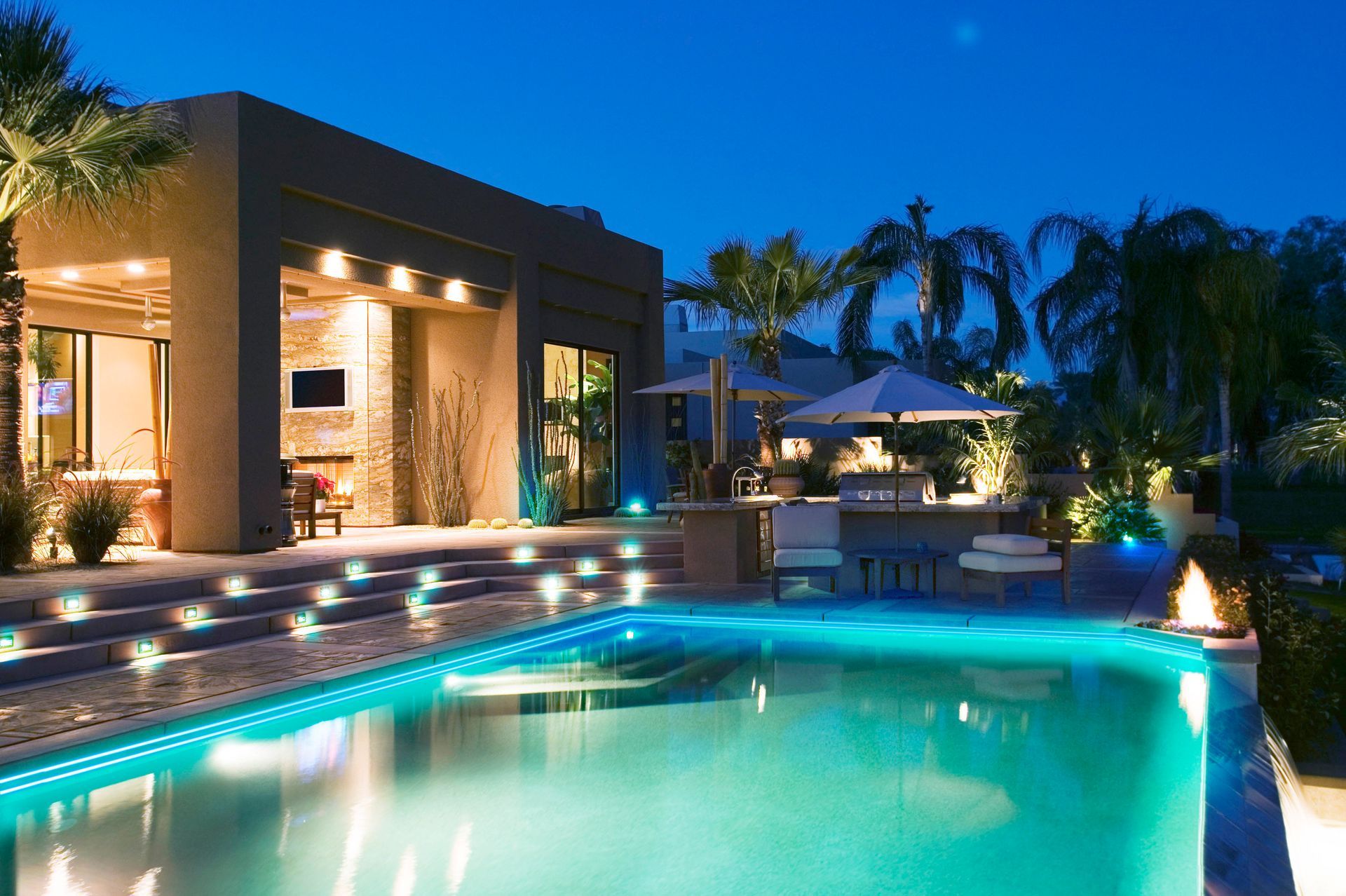
Steps, stairs, raised patios, retaining walls, and grade changes can become harder to perceive after dark. Step lighting addresses these areas by providing localized illumination near transitions in elevation. Fixtures may be integrated into adjacent walls, stair risers, or nearby structures depending on the design and construction of the space.
The goal is usually to make changes in level easier to recognize without turning the staircase into the brightest feature in the yard. Soft, controlled illumination can define individual surfaces while supporting the atmosphere of a patio, deck, or garden. This is especially valuable in areas where decorative lighting is already being used, and a large general-purpose fixture would disrupt the desired mood.
Choosing Patio Lighting for Outdoor Living Areas
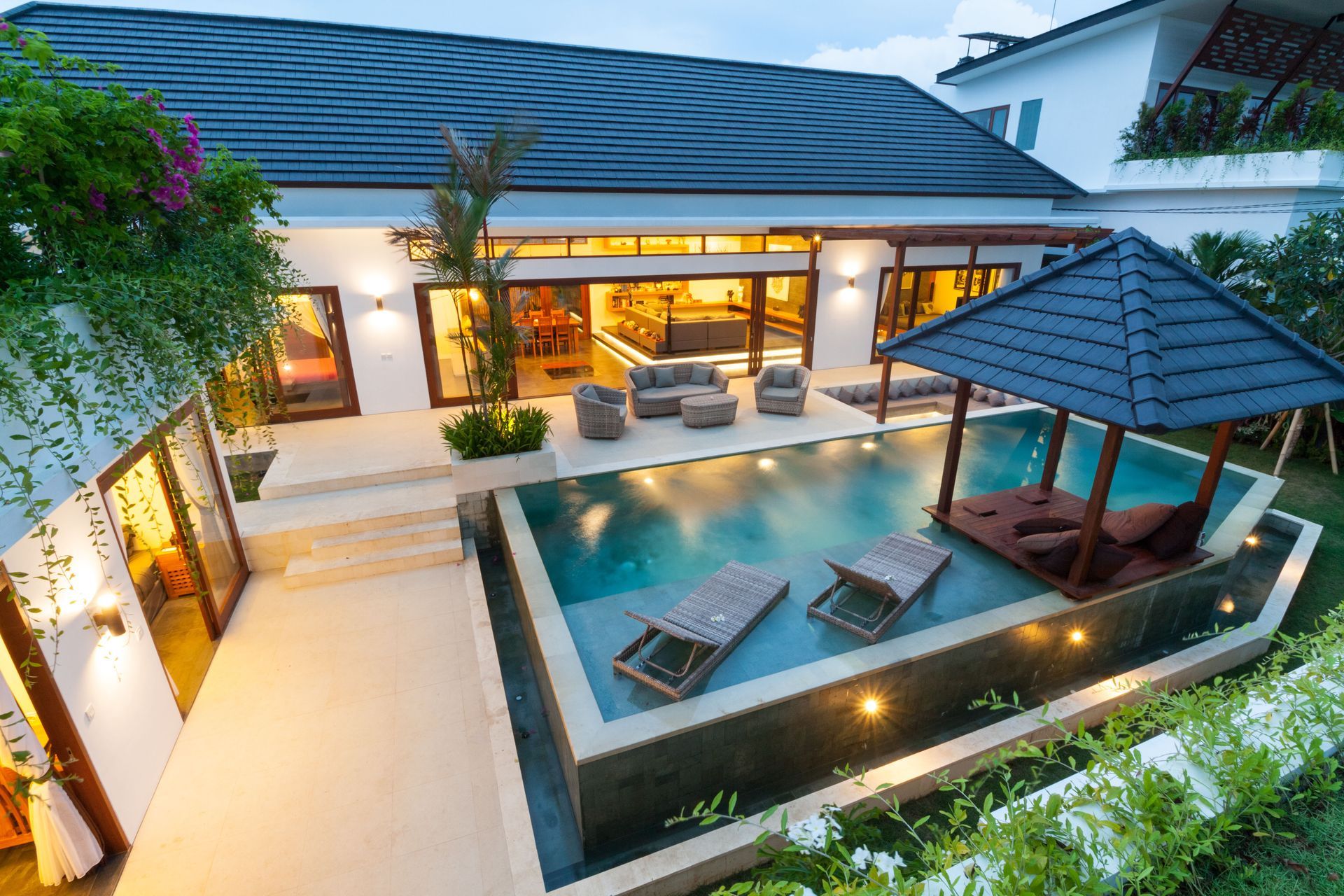
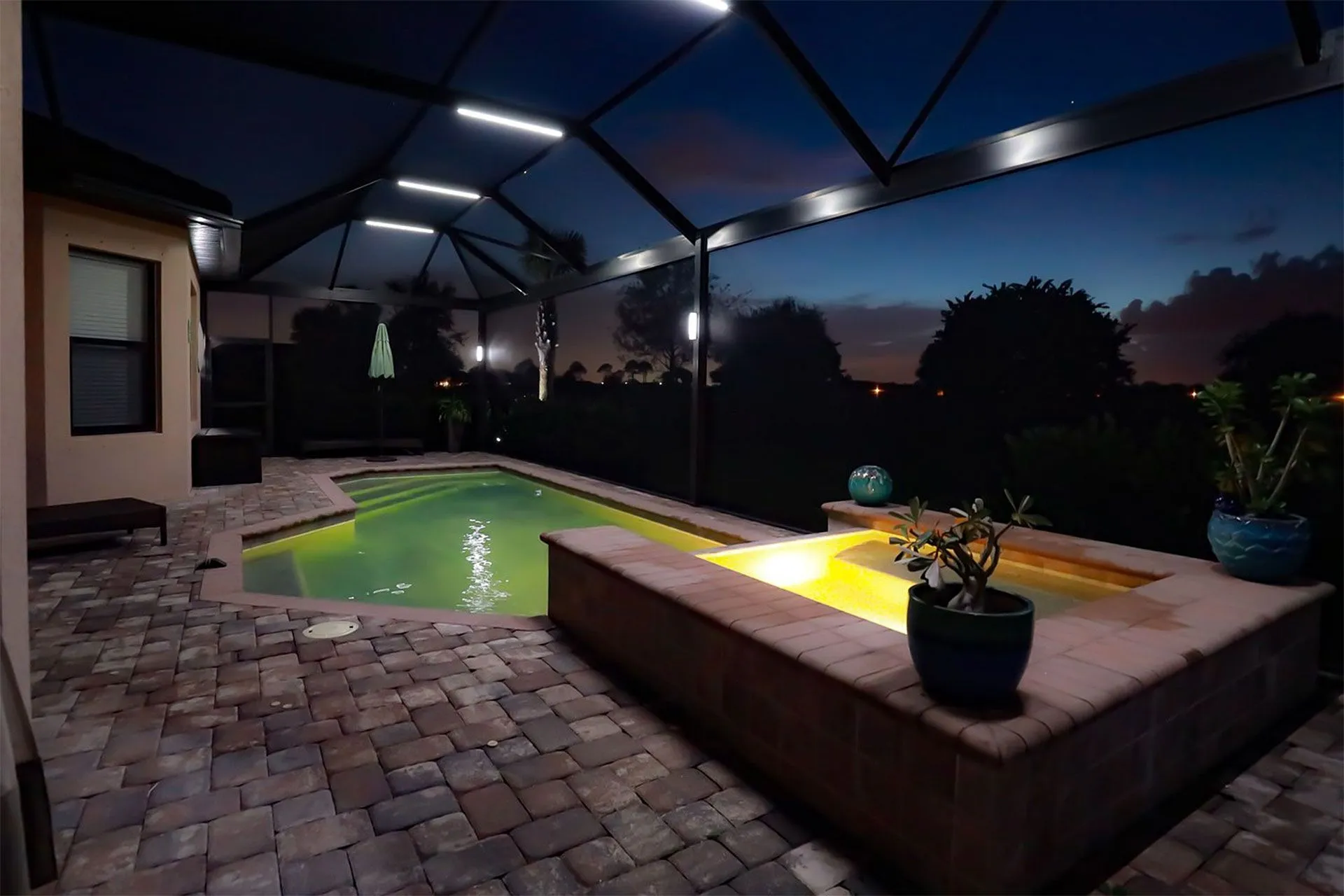
Patios, lanais, decks, and outdoor dining areas often need more flexible illumination than other parts of the property. People may use these spaces for conversation, meals, entertaining, or quiet relaxation, and each activity benefits from a comfortable level of light. Patio lighting can include overhead fixtures, wall-mounted lights, discreet landscape fixtures, or other professionally installed sources that create layered illumination.
Well-designed outdoor lighting around a patio can also strengthen the connection between indoor and outdoor spaces. Views through windows and doors remain visually interesting after dark, while exterior seating areas feel like intentional extensions of the home. According to Lawn Starter, professionally installed systems can remain in service for up to 15 years when they receive proper maintenance, making thoughtful fixture selection and planning important considerations for long-term use.
Choosing Uplighting for Dramatic Vertical Emphasis
Uplighting directs illumination from a lower position toward a taller subject or surface. It is frequently used to emphasize columns, palms, large trees, textured walls, and prominent architectural details. Because people are accustomed to light coming from above, upward-directed illumination can create a dramatic effect that gives a property a distinctive nighttime appearance.
This technique is especially effective when a home or landscape includes strong vertical features. A narrow beam can emphasize the height of a column or trunk, while a broader beam may reveal a larger section of facade or foliage. The angle, distance, and intensity of the fixture influence whether the result feels subtle, theatrical, or somewhere in between.
Choosing Downlighting for Natural-Looking Illumination
Downlighting places the light source above the area being illuminated and directs the beam toward the ground. Fixtures can be associated with architectural structures or suitable landscape features, depending on the property and installation. The effect can resemble natural illumination from above, particularly when the light passes through tree branches and creates soft patterns across paths, lawns, or planting beds.
This style can cover broader areas while keeping fixtures less noticeable from common viewing positions. It may be useful around gathering spaces, pathways, driveways, and landscape areas where a property owner wants illumination without drawing attention to the source itself. The height and beam pattern influence both the coverage and the character of the resulting light.
Downlighting also combines well with other styles. It can provide a quiet foundation of usable illumination while accent fixtures create focal points and wall lights define the home itself. When these layers are balanced, outdoor lighting can feel cohesive from one part of the property to another rather than like a collection of unrelated fixtures.
Creating a Cohesive Lighting Design for Your Home
The most effective exterior designs rarely depend on just one fixture type. A property may need path illumination for circulation, wall fixtures for entrances, accent lights for landscaping, and softer sources around outdoor living areas. Combining styles allows each fixture to perform a specific role while contributing to a unified nighttime appearance.
A cohesive plan also considers what the property looks like from multiple perspectives. The view from the street may emphasize architecture and trees, while the view from a patio may focus on gardens and gathering areas. Brightness, color quality, fixture placement, and contrast all influence how comfortably those different spaces relate to one another.
Outdoor lighting should ultimately support the home’s architecture, landscape, and everyday use. Choosing fixtures based on purpose rather than appearance alone can produce a more balanced result, while professional planning helps account for technical considerations, long-term performance, and the visual relationship between illuminated areas and surrounding darkness.
Bringing Your Exterior Lighting Vision to Life
A carefully planned lighting system can change how a home and landscape are experienced after sunset. Path lights can define circulation, accent fixtures can showcase landscaping, wall lights can reinforce architectural character, and specialized techniques can create depth throughout the property. The strongest designs bring these elements together so that functionality and atmosphere work in harmony.
At Lanai Bright, we help homeowners develop lighting solutions that complement their properties and the way they use their outdoor spaces. Our team can evaluate the landscape, architecture, and desired atmosphere to create a coordinated plan, and we can help you select an approach that feels polished, comfortable, and appropriate for your home. Contact us to discuss your exterior lighting goals and explore a professionally designed solution.